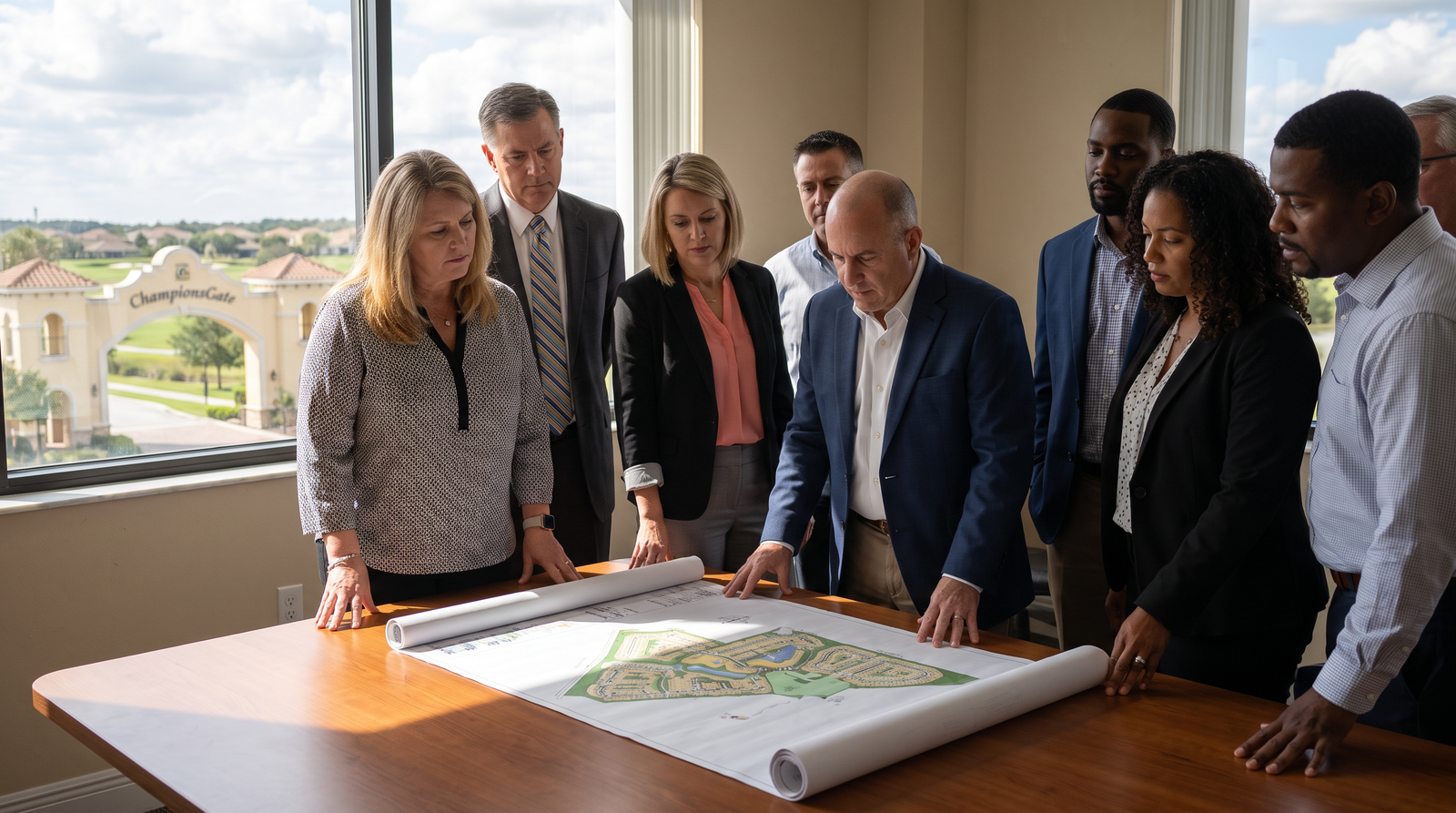
The High Stakes of the ChampionsGate Vacation Rental Market
A home in ChampionsGate is not a typical rental asset. It sits inside a gated resort community built around golf, a lazy river, a swim-up bar, and a clubhouse that guests have already seen in the listing photos before they arrive. That setting sells the booking — and it also sets the bar every cleaning, repair, and check-in has to clear.
Location matters here: ChampionsGate sits in the Four Corners region of Florida, where Osceola, Polk, Orange, and Lake counties meet. A property a few minutes down the road may fall under an entirely different county's short-term rental rules. ChampionsGate addresses are governed by Osceola County, and owners who apply neighboring counties' assumptions to their compliance planning tend to find out the hard way.
The ownership math has grown more layered. Between the Florida DBPR vacation rental license required for stays under 30 days, Osceola County short-term rental licensing and inspection fees totaling $410 up front, a $150 annual renewal, and ChampionsGate CDD annual assessments running from $1,300 to $2,800, the fixed cost of simply being allowed to operate is now a real line item.
In 2026, treating that stack as paperwork instead of strategy is how a high-yield property quietly becomes a break-even one.
Navigating the Regulatory Landscape in Osceola County
Compliance is not a box to check after the first booking — it is the foundation the rest of the business sits on. An unlicensed listing is a listing that can be pulled, fined, or delisted by a platform at the worst possible moment, usually during peak season when the revenue loss stings most.
Owners planning for short-term rental licensing in Osceola County should budget for the following:
-
Initial county licensing and inspection: Osceola County short-term rental licensing and inspection fees total $410to get started.
-
State licensing: A Florida DBPR vacation rental license is required for stays under 30 days, issued by the Florida Department of Business and Professional Regulation.
-
Annual renewal: The annual renewal fee for an Osceola County short-term rental license is $150, per Osceola County Community Development.
-
Inspection readiness: Properties must be prepared to pass inspection, not merely scheduled for one.
The 30-day line is the whole ballgame. Any stay under 30 days places the property squarely in the vacation rental category, with the state license obligation that comes with it. Owners who assume a "mostly monthly" booking calendar exempts them are misreading the rule — a single shorter stay puts the property in scope.
The Financial Reality of ChampionsGate CDD Assessments
Every ROI model built for a ChampionsGate home has to account for the Community Development District. The CDD is a financing mechanism, not a homeowners association, and it appears on the tax bill as a separate assessment tied to the parcel. Investors who model only mortgage, insurance, taxes, and management fees will be short every single year.
ChampionsGate CDD annual assessments range from $1,300 to $2,800, according to the ChampionsGate Community Development District — the figure varies by property type and location within the district.
What that assessment is actually buying:
-
Infrastructure. Roads, drainage, utilities, and the common-area landscaping that makes the drive-in feel like a resort rather than a subdivision.
-
The amenity package. The ChampionsGate amenities guests book for — the water park, clubhouse, and recreation facilities — are funded and maintained through this structure.
-
Long-term debt service. A portion retires the bonds that built the district in the first place.
The strategic response is not to resent the assessment but to price against it. The amenities the CDD funds are the same features that justify a premium nightly rate, and a manager who markets them properly converts a fixed cost into a competitive advantage.
Why Post-Construction Cleaning is the First Step to Success
New construction in ChampionsGate arrives beautiful and filthy. Drywall dust settles into HVAC returns, grout haze clouds tile, adhesive residue clings to appliance faces, and fine particulate hides in cabinet runners and window tracks. A standard turnover clean — designed for a lived-in home between guests — does not touch any of it.
The Handover Gap
Construction project managers hand over a completed build; owners expect a rentable asset. Those are not the same thing. Between certificate of occupancy and first check-in sits a window where the property is technically finished but commercially unready. That gap is where first reviews get damaged. A guest paying resort rates will notice dust on a ceiling fan blade or a smudged shower enclosure, and they will write about it.
The Guest-Ready Standard
Post-construction detailing works top-down and inside-out: ducts and vents, light fixtures, interior cabinetry, appliance interiors, window tracks, baseboards, then floors last. It also protects the finishes themselves — the wrong product on a natural stone counter or a matte-finish luxury vinyl plank causes damage that shows up as a replacement cost two seasons later.
Done properly once, the property enters its rental life at full value rather than clawing back toward it.
Maximizing Yield Through Hospitality-First Management
Booking platforms reward properties that guests rate well and that respond quickly. In 2026, that means guest experience is not a soft metric sitting downstream of revenue — it is the input that determines how often the listing gets shown at all. Passive management, where an owner collects a payout and hears from the manager only when something breaks, leaves that lever untouched.
Effective property management in Champions Gate starts with marketing the specific thing being sold. The listing should name the resort features by name, show them, and explain how guests access them.
"We booked this place for the lazy river and the water slides. The listing never explained the resort access process and we lost half a day figuring it out."
Operations follow the same logic. Response times, pre-arrival messaging, and a maintenance network that can get a technician onsite the same day are what keep a minor issue from becoming a refund request.
"The AC went out at 9pm on a Saturday. Someone was there before midnight."
"Everything was exactly as described, and that is rarer than it should be."
Active revenue optimization — rate adjustment around local demand peaks, minimum-stay tuning, and review recovery — is what separates an occupied calendar from a profitable one.
Summary: The ChampionsGate Owner’s Checklist
For owners and investors evaluating a ChampionsGate property in 2026, these are the non-negotiables:
-
Secure both licenses before you list. Osceola County short-term rental licensing and the Florida DBPR vacation rental license are separate requirements, and the DBPR license applies to any stay under 30 days. Start the process before closing, not after.
-
Budget the CDD assessment as a fixed annual cost. ChampionsGate CDD annual assessments range from $1,300 to $2,800 depending on property type. It belongs in the pro forma alongside taxes and insurance, not in a contingency line.
-
Plan for annual renewal, not just initial setup. The $410 in initial county licensing and inspection fees is a one-time entry cost; the $150 annual renewal recurs for as long as the property operates.
-
Treat post-construction cleaning as a capital protection expense. New builds need detailing, not turnover cleaning, before the first guest arrives. Finish damage from improper products costs more than the clean ever would.
-
Choose a manager who knows the Four Corners boundary lines. Osceola County rules differ from those in Polk, Orange, and Lake. A manager applying the wrong county's framework creates compliance exposure the owner ultimately owns.
Partnering for Magical Luxury Memories in Central Florida
The ChampionsGate market rewards owners who treat their property as an operating business rather than a passive holding. That means compliance handled on schedule, assessments budgeted honestly, finishes protected from day one, and guest experience managed as the revenue driver it actually is.
B&D Florida Property Management works at the point where construction handover meets hospitality — taking a newly completed home through detailed post-construction cleaning, preparing it to a guest-ready standard, and then running it with the responsiveness a resort-rate booking demands. The model is owner-centric by design: clear reporting, local technicians, and a management approach built around Osceola County's requirements rather than a generic statewide template.
A luxury asset in a premier resort community deserves more oversight than a standard rental, not less. The difference between a property that compounds value and one that slowly erodes it usually comes down to who is paying attention between guests.
Request a property evaluation to review your home's rental positioning, compliance status, and turnover standards — and to see what a specialized local strategy looks like applied to your specific address.